
Starting cycling feels simple at first. You buy a bike, ride around the neighborhood, and assume progress will happen naturally. Then reality kicks in. Your legs burn on small hills, your breathing feels out of control, and experienced cyclists seem to glide effortlessly while you struggle to maintain pace.
That phase is completely normal.
Every cyclist goes through a series of beginner milestones before becoming stronger, faster, and more efficient on the bike. The interesting part is that these milestones are not only about speed or distance. They also include endurance, cadence control, recovery, bike handling, climbing confidence, fueling habits, and understanding training zones.
Many new riders quit because they compare themselves to advanced cyclists too early. Smart riders focus on progression instead. One extra kilometer, one smoother ride, or one stronger climb matters more than expensive gear or elite metrics during the beginner stage.
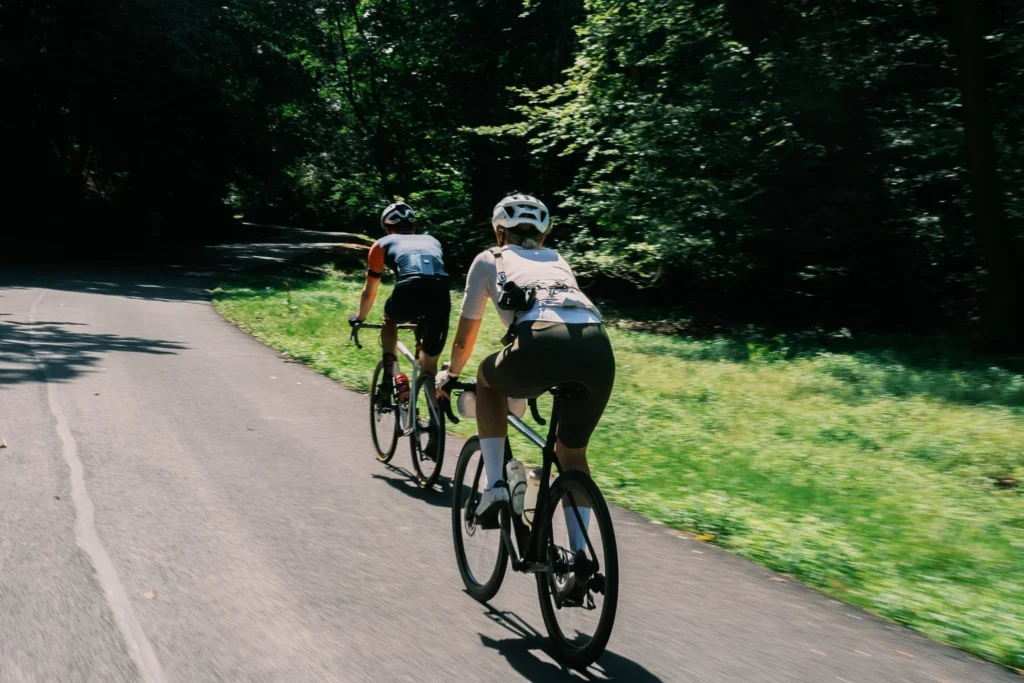
Research and coaching data consistently show that beginner cyclists improve rapidly in the first year through consistent riding, aerobic base training, and cadence development. Most beginners naturally move from roughly 60 RPM cadence toward 85–90 RPM as efficiency improves over time.
This guide breaks down the real cycling beginner status milestones that signal meaningful progress and help riders understand where they currently stand.
What Are Cycling Beginner Status Milestones?
Cycling beginner status milestones are measurable signs that your body, fitness, technique, and confidence are improving on the bike.
These milestones help riders track progression without obsessing over professional-level numbers. Instead of focusing only on average speed, beginner milestones measure overall cycling development.
Common examples include:
- Completing your first 10-mile ride
- Riding without excessive soreness
- Maintaining consistent cadence
- Climbing hills without stopping
- Understanding heart rate zones
- Increasing Functional Threshold Power (FTP)
- Riding comfortably in groups
- Recovering faster between sessions
- Building weekly riding consistency
Most beginner cyclists progress through these stages gradually during the first 6–18 months of regular riding.
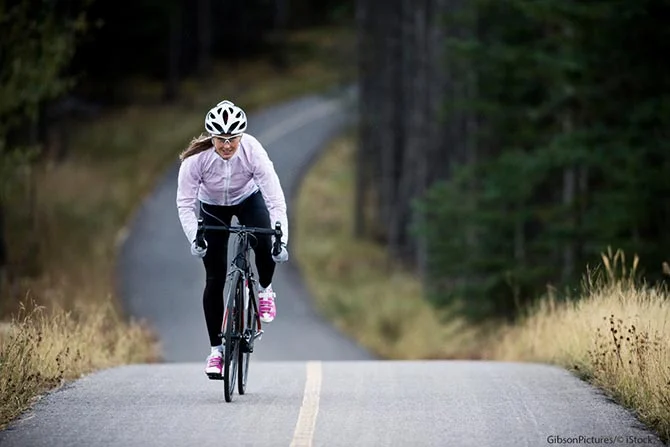
One major mistake beginners make is assuming fitness develops evenly. It does not. A rider may improve endurance quickly while still struggling with climbing or cadence control. Another rider may gain speed but lack bike-handling confidence in traffic or group rides.
Cycling development is layered. Aerobic fitness, muscular endurance, pedaling efficiency, and mental confidence improve at different rates.
That is why tracking milestones creates motivation. Instead of asking, “Am I fast enough?” beginners can ask, “What improved this month?”
The First Major Milestone: Riding Consistently
The first real cycling milestone has nothing to do with speed.
It is consistency.
Most new cyclists start with motivation but lack routine. Riding once every two weeks does not build meaningful fitness adaptations. Consistency trains the cardiovascular system, strengthens muscles, improves pedaling economy, and develops recovery capacity.
For beginners, riding 3–4 times weekly is often enough to trigger noticeable improvements within the first two months.
At this stage, the goal is simple:
| Beginner Cycling Frequency | Expected Adaptation |
|---|---|
| 1 ride weekly | Minimal progress |
| 2 rides weekly | Slow endurance improvement |
| 3–4 rides weekly | Strong beginner progression |
| 5+ rides weekly | Faster gains if recovery is managed |
The body responds surprisingly fast during this stage. Heart rate stabilizes, breathing improves, and rides feel less exhausting.
Many coaches recommend focusing heavily on low-intensity endurance riding early on because aerobic development forms the foundation of long-term cycling performance. Zone 2 riding, where conversation remains possible, is widely recognized as the base-building zone for endurance cyclists.
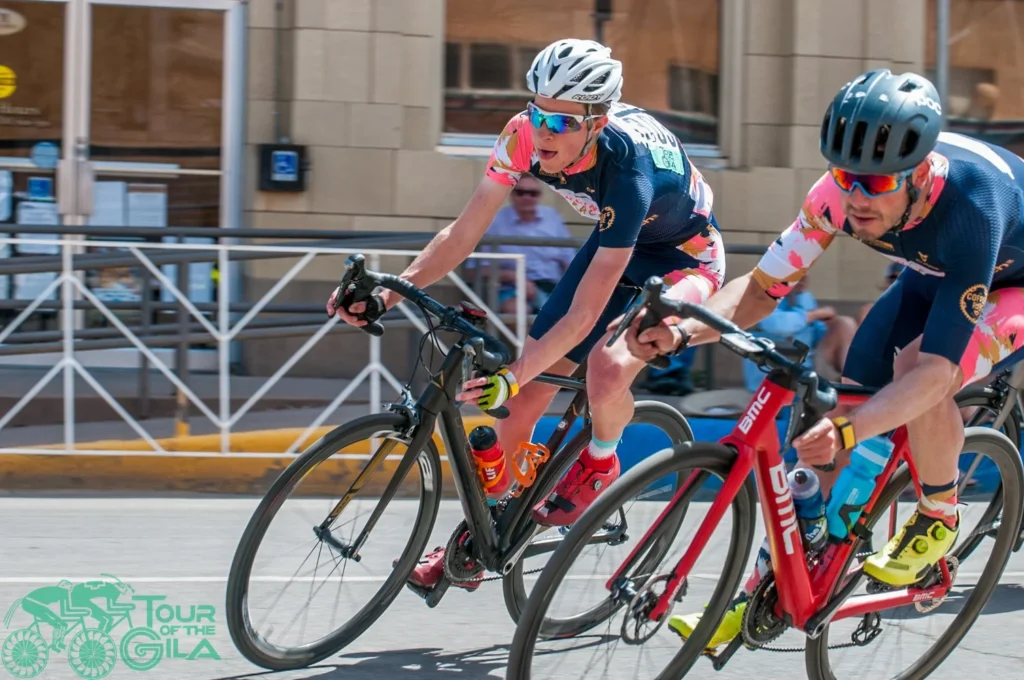
One overlooked milestone here is emotional consistency. New cyclists who continue riding through bad weather, fatigue, and low motivation usually become long-term cyclists.
Discipline starts replacing excitement.
That shift changes everything.
Completing Your First Long Ride
Every beginner remembers their first genuinely long ride.
For some riders, that number is 20 kilometers. For others, it is 50 kilometers or a full century ride later on. The exact distance matters less than the experience itself.
Long rides introduce beginners to several critical lessons:
- Pacing
- Hydration
- Saddle comfort
- Energy management
- Mental endurance
- Nutrition timing
This milestone often exposes weaknesses quickly. Riders discover that cycling fitness is not just leg strength. It also involves fueling correctly, maintaining posture, and managing effort.
Most beginners start too aggressively. They attack early sections, burn through glycogen stores, then struggle badly in the final third of the ride.
Experienced cyclists understand pacing instinctively. Beginners learn it through mistakes.
A practical benchmark for new riders is reaching these progression stages:
| Milestone Ride | Beginner Status Meaning |
|---|---|
| 10 km | Building comfort |
| 25 km | Basic endurance improving |
| 50 km | Solid beginner milestone |
| 75 km | Intermediate endurance foundation |
| 100 km | Century-level confidence |
The first successful 50 km ride is usually the point where beginners stop seeing cycling as casual recreation and begin identifying as cyclists.
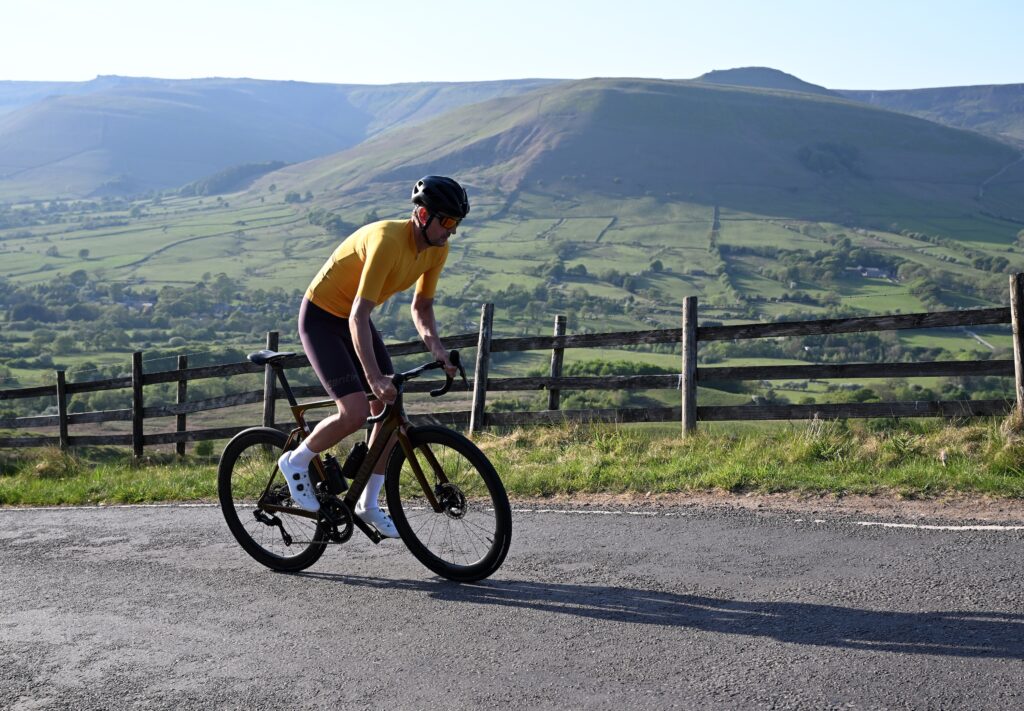
Learning Proper Cadence Control
Cadence is one of the clearest indicators of cycling maturity.
Beginner riders often pedal slowly in heavy gears because it feels powerful. Unfortunately, low cadence riding creates excessive muscular fatigue and knee stress.
Studies and coaching benchmarks commonly place efficient cycling cadence around 80–95 RPM for most riders. Beginners usually begin closer to 60 RPM before improving naturally through practice.
Cadence development matters because smoother pedaling improves:
- Energy efficiency
- Aerobic endurance
- Climbing rhythm
- Joint comfort
- Power distribution
A beginner milestone occurs when riders stop “mashing gears” and start spinning smoothly.
You can usually identify this phase when:
- Hills feel less brutal
- Legs stay fresher longer
- Breathing becomes more controlled
- Gear changes become instinctive
- Cadence remains stable under fatigue
Many cyclists use cadence sensors from brands like Garmin, Wahoo, and Sigma Sports to monitor RPM development, but beginners can also improve cadence simply by focusing on lighter gears and smoother pedal strokes.
This milestone often arrives quietly. One day, pedaling simply feels easier.
Understanding Cycling Training Zones
New riders often think every ride should feel hard.
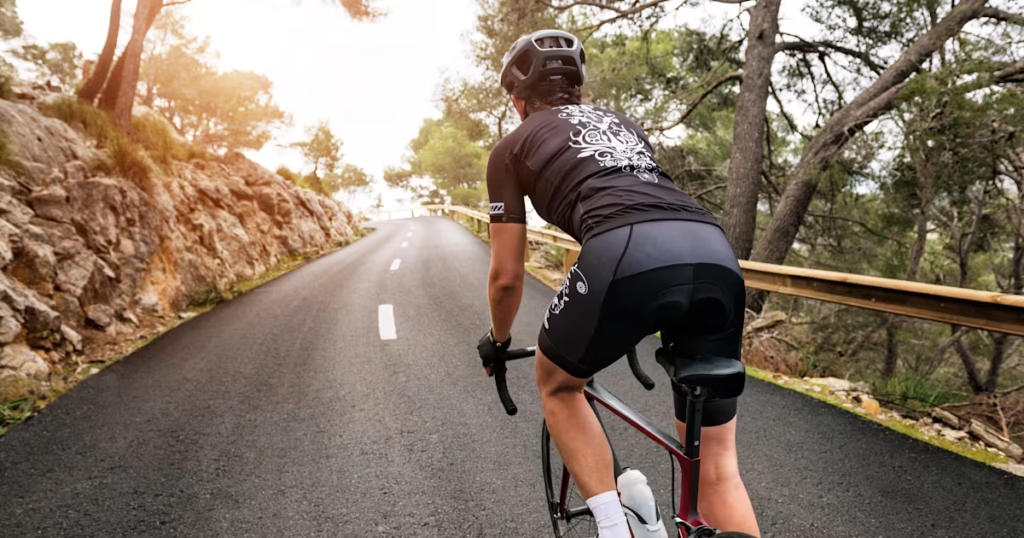
That approach usually leads to burnout.
A major beginner milestone happens when cyclists understand training intensity and stop riding at maximum effort constantly.
Cycling training zones help riders structure effort levels properly. The most widely used system includes recovery, endurance, tempo, threshold, VO2 max, and sprint zones.
Zone 2 training has become especially important in modern endurance coaching because it builds aerobic efficiency without excessive fatigue. Many elite cyclists spend most training time in lower-intensity aerobic zones.
For beginners, learning effort management creates huge performance gains.
Basic Beginner Cycling Zones
| Zone | Effort Level | Purpose |
|---|---|---|
| Zone 1 | Very easy | Recovery |
| Zone 2 | Conversational pace | Aerobic base |
| Zone 3 | Moderate | Tempo endurance |
| Zone 4 | Hard | Threshold fitness |
| Zone 5 | Very hard | VO2 max development |
A beginner milestone occurs when riders stop chasing average speed and start training intentionally.
That shift usually improves endurance much faster.
Your First FTP Benchmark
Functional Threshold Power, commonly called FTP, is one of the most recognized cycling performance metrics.
It measures the highest power output a cyclist can sustain for roughly one hour.
For beginners, FTP is not about elite numbers. It is about establishing a starting point and improving gradually over time.
Research-based beginner FTP ranges commonly fall around 1.5–2.5 watts per kilogram for new or lightly trained cyclists.
Beginner FTP Benchmarks
| Rider Level | Typical FTP W/kg |
|---|---|
| Untrained | 1.5–2.0 |
| Recreational Beginner | 2.0–2.5 |
| Trained Amateur | 2.5–3.2 |
| Competitive Amateur | 3.2–3.8 |
Many beginners become discouraged after their first FTP test because the numbers seem low compared to advanced cyclists online.
That comparison is misleading.

FTP progression matters far more than initial scores.
One of the biggest beginner milestones is seeing consistent FTP growth over several months. Even small improvements signal stronger aerobic adaptation and better endurance efficiency.
Community discussions among amateur cyclists regularly show dramatic first-year gains through structured riding, Zone 2 training, and increased weekly volume.
Climbing Hills Without Fear
Hills expose cycling weaknesses faster than almost anything else.
New riders often attack climbs too aggressively, spike heart rate immediately, and lose rhythm halfway up.
A major cycling milestone occurs when climbing becomes manageable instead of intimidating.
This phase usually includes:
- Better gear selection
- Smoother breathing
- Improved pacing
- Stable cadence
- Reduced panic under effort
The mental side matters just as much as physical fitness.
Experienced cyclists know that climbing is controlled suffering. Beginners often treat every hill like a sprint effort.
One practical breakthrough happens when riders stay seated longer during climbs instead of standing immediately and burning energy.
Another milestone is learning how body weight, gearing, cadence, and aerobic conditioning interact during elevation changes.
Cyclists who consistently improve climbing usually focus on:
- Lower body weight
- Increased aerobic base
- Consistent cadence
- Strength endurance
- Longer steady rides
Climbing confidence changes how riders approach routes entirely. Suddenly, difficult terrain feels exciting instead of stressful.
Riding in a Group Without Anxiety
Solo cycling and group cycling feel completely different.
Many beginners struggle with drafting, wheel spacing, communication, and pace consistency in group rides.
The first successful group ride is a major confidence milestone.
It means the rider has developed enough bike handling skills, awareness, and fitness to ride safely around others.
Beginner group ride milestones include:
- Holding a straight line
- Braking smoothly
- Riding predictably
- Maintaining pace
- Understanding hand signals
- Rotating efficiently
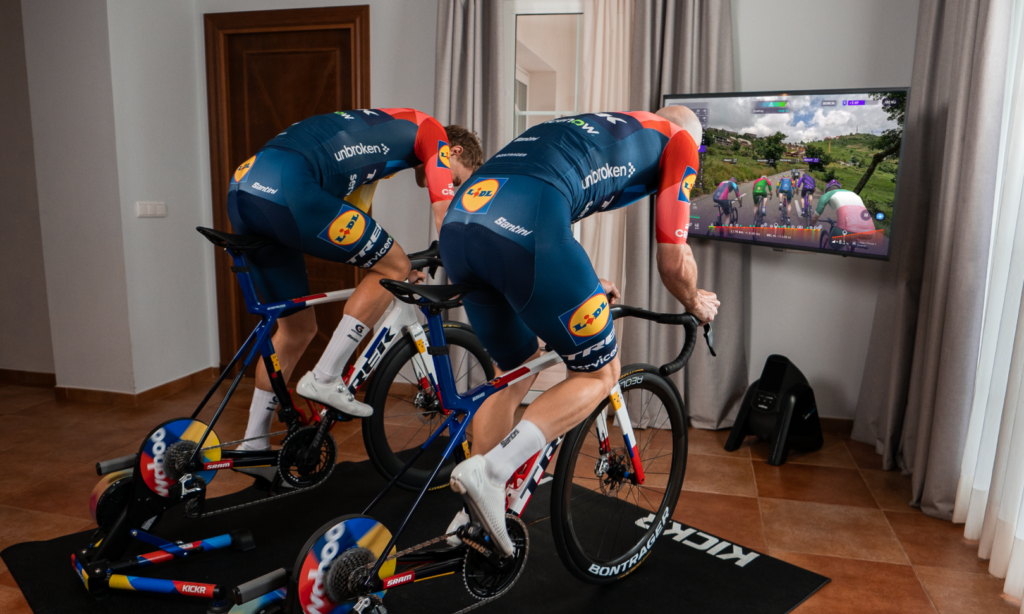
This stage teaches cyclists energy conservation quickly. Drafting behind other riders can reduce aerodynamic resistance significantly, making group riding much more efficient than solo riding.
Beginners often realize during their first organized ride that positioning matters almost as much as strength.
This milestone also introduces cycling culture more deeply. Riders learn etiquette, pacing discipline, and teamwork.
For many people, this is where cycling becomes addictive.
Recovering Faster Between Rides
Recovery is one of the clearest indicators of fitness progression.
At the start, beginner cyclists may feel sore for several days after one moderate ride. Over time, the body adapts.
A major milestone occurs when riders can complete multiple rides weekly without excessive fatigue.
Signs of improved cycling recovery include:
- Lower resting heart rate
- Reduced muscle soreness
- Better sleep quality
- Faster post-ride recovery
- Improved energy levels
- Stable training consistency
This stage reflects stronger cardiovascular conditioning and muscular adaptation.
Recovery improvements are heavily influenced by:
- Nutrition
- Sleep
- Hydration
- Ride intensity
- Training volume
- Stress management
Cyclists who ignore recovery usually plateau early.
Professional-level training science increasingly emphasizes recovery quality as strongly as workout intensity. Metrics like heart rate variability, sleep tracking, and perceived exertion are now commonly used to monitor readiness and fatigue.
For beginners, simple habits matter most:
- Eating carbohydrates after rides
- Drinking enough water
- Sleeping consistently
- Avoiding excessive high-intensity sessions
The stronger the aerobic base becomes, the faster recovery tends to improve.
Building Confidence With Bike Maintenance
One underrated beginner milestone is mechanical confidence.
Early-stage cyclists often panic over simple issues like flat tires, chain drops, or brake rubbing.
Eventually, every rider reaches the point where basic maintenance feels normal.
Important beginner maintenance milestones include:
- Fixing a puncture
- Cleaning the drivetrain
- Adjusting tire pressure
- Lubricating the chain
- Understanding gear shifting
- Performing safety checks
Cyclists who learn basic maintenance save money, avoid unnecessary stress, and ride more confidently.
Brands like Shimano, SRAM, Trek, Specialized, Canyon, and Giant have helped simplify bike technology for modern riders, but maintenance knowledge still matters.
This milestone creates independence.
A rider who can handle small mechanical problems feels far more comfortable exploring longer routes and unfamiliar terrain.
The Mental Milestones Most Cyclists Ignore
Physical progress gets attention, but mental development often matters more.
Beginner cyclists experience several psychological breakthroughs that strongly influence long-term success.
Mental Cycling Milestones
- No longer feeling embarrassed about being slower
- Enjoying long rides instead of surviving them
- Understanding pacing patience
- Riding comfortably alone
- Developing discipline
- Accepting gradual progress
- Feeling confident in cycling clothing and gear
- Looking forward to training sessions
Cycling rewards consistency more than talent.
That truth becomes obvious after several months.
The riders who improve most are rarely the ones who start strongest. They are usually the ones who stay consistent through setbacks, weather changes, fatigue, and slow periods.
This mindset shift separates temporary riders from committed cyclists.
Common Beginner Cycling Mistakes That Slow Progress
Many beginners unknowingly delay progression through avoidable mistakes.
Most Common Errors
Riding Too Hard Too Often
Constant high-intensity riding creates fatigue without enough aerobic development.
Ignoring Nutrition
Long rides require carbohydrates, hydration, and electrolyte balance.
Buying Expensive Gear Too Early
Fitness matters more than equipment at the beginner stage.
Comparing Yourself to Advanced Cyclists
Social media often distorts realistic progression timelines.
Skipping Recovery
Rest is where adaptation actually happens.
Poor Bike Fit
Improper saddle height and positioning can cause knee pain and discomfort.
Experts consistently recommend professional bike fitting because comfort and biomechanics strongly affect pedaling efficiency and injury prevention.
Avoiding these mistakes speeds up progression dramatically.
How Long Does It Take to Stop Feeling Like a Beginner Cyclist?
This question appears constantly in cycling communities.
The answer depends on consistency, training quality, recovery, and riding frequency.
Most cyclists begin feeling noticeably stronger after 8–12 weeks of regular riding.
After roughly 6–12 months, many riders achieve these milestones:
- Comfortable 50 km rides
- Better climbing efficiency
- Improved cadence control
- Stronger aerobic fitness
- Faster recovery
- Understanding pacing
- Basic maintenance confidence
- Structured training awareness
Cycling development never fully stops, though.
Even advanced riders continue chasing new milestones involving endurance, power output, climbing efficiency, race tactics, and recovery optimization.
That ongoing progression is part of what keeps cycling rewarding for decades.
Practical Weekly Beginner Cycling Plan
Here is a realistic structure for beginner progression:
| Day | Focus |
|---|---|
| Monday | Rest or recovery ride |
| Tuesday | Short endurance ride |
| Wednesday | Cadence practice |
| Thursday | Zone 2 endurance |
| Friday | Rest |
| Saturday | Long ride |
| Sunday | Easy recovery spin |
This type of schedule balances progression with recovery and prevents burnout.
Beginners do not need complicated interval programs immediately. Consistent riding volume creates most early gains.
FAQ Section
What is considered beginner level in cycling?
A beginner cyclist is usually someone within their first year of structured riding who is still developing endurance, cadence efficiency, pacing, and recovery ability.
What is a good beginner cycling distance?
For most new riders, 10–25 km is a reasonable starting range. Reaching 50 km comfortably is often viewed as a strong beginner milestone.
How long does it take to improve cycling fitness?
Most beginners notice cardiovascular and endurance improvements within 6–8 weeks of consistent riding 3–4 times weekly.
What is a good FTP for a beginner cyclist?
Typical beginner FTP ranges fall around 1.5–2.5 watts per kilogram depending on age, training history, and body composition.
What cadence should beginner cyclists aim for?
Most beginner cyclists naturally pedal around 60 RPM initially, then gradually improve toward 80–90 RPM with practice and fitness development.
How many days a week should beginners cycle?
Three to four rides weekly usually provide enough frequency for noticeable improvement while allowing recovery.
Is cycling mainly about endurance or strength?
Cycling relies heavily on aerobic endurance, though muscular endurance, cadence control, pacing, and recovery also play important roles.

